A blog where students learning English as a Second Language can go to find authentic resources related to all aspects of learning English.
Please use the list on the right side of the page
to find material you are interested
in.
A listening for any level related to the environment and environmental issues in the United States and around the world. Click the link UNDER the picture to start watching. Enjoy.
Before the Flood || The Garden of Earthly Delights (~1510) by Hieronymus Bosch.
Here is a great episode from a new series about the mind on Youtube. Enjoy! Please use subtitles if necessary to write down new vocabulary. Also. Do you think you could stay in isolation for 3 days???
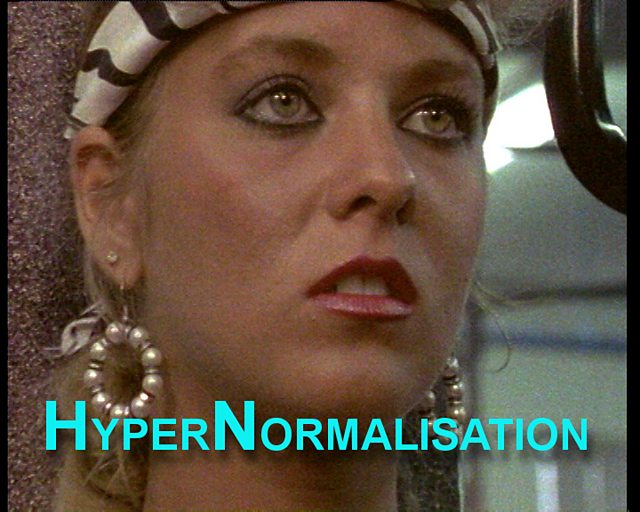
"I have a new film going up on iPlayer this Sunday - the 16th. Here’s a background to what the film is about. And a trail.
We live in a time of great uncertainty and confusion. Events keep happening that seem inexplicable and out of control. Donald Trump, Brexit, the War in Syria, the endless migrant crisis, random bomb attacks. And those who are supposed to be in power are paralysed - they have no idea what to do.
This film is the epic story of how we got to this strange place. It explains not only why these chaotic events are happening - but also why we, and our politicians, cannot understand them.
It shows that what has happened is that all of us in the West - not just the politicians and the journalists and the experts, but we ourselves - have retreated into a simplified, and often completely fake version of the world. But because it is all around us we accept it as normal.
HyperNormalisation
The film has been made specially for [online viewing] - and is a giant narrative spanning forty years, with an extraordinary cast of characters. They include the Assad dynasty, Donald Trump, Henry Kissinger, Patti Smith, the early performance artists in New York, President Putin, intelligent machines, Japanese gangsters, suicide bombers - and the extraordinary untold story of the rise, fall, rise again, and finally the assassination of Colonel Gaddafi.
All these stories are woven together to show how today’s fake and hollow world was created. Part of it was done by those in power - politicians, financiers and technological utopians. Rather than face up to the real complexities of the world, they retreated. And instead constructed a simpler version of the world in order to hang onto power
But it wasn’t just those in power. This strange world was built by all of us. We all went along with it because the simplicity was reassuring. And that included the left and the radicals who thought they were attacking the system. The film shows how they too retreated into this make-believe world - which is why their opposition today has no effect, and nothing ever changes.
But there is another world outside. And the film shows dramatically how it is beginning to pierce through into our simplified bubble. Forces that politicians tried to forget and bury forty years ago - that were then left to fester and mutate - but which are now turning on us with a vengeful fury."
Prepare yourself. This thing is about 3 hours long... also, take the time to re-watch something if you haven't learned about the topic before.
THE FILM (with reliable English subtitles)
I have watched the film once and plan on watching it again soon. It is a tale that intrigues, confuses, and most of all, opens one's eyes to the fact that those who are worshipped as powerful cannot reconcile the fact that we live in a complex society and that any path to a more docile, obedient, and submissive society will be walked down. As a teacher, my goals are to help you see the world from many perspectives and in the documentary I believe Curtis creates an compelling narrative. The question remains though: How are we to get out of our comfort zones and take power back from those who have gained so much? What is the new ideology and who can possibly lead it?
Also, if we are to get out of our comfort zones/echo chambers/bubbles we must also hear any counter arguments and not allow any voice to be suppressed. So, I challenge you to find someone who disagrees with you on something and have a conversation with them.
This page looks at the different ways of expressing past time in English. The three past tenses of English all have simple and progressive forms, as illustrated below. They can also be formed in the active, as in the examples on this page, or the passive
English uses three principal forms of the past, the Simple Past (or preterite),the Present Perfect, and the Past perfect, sometimes called the Pluperfect. All of these forms can also be used with a progressive aspect.
Forms of past tenses : sample verb make1. Simple active forms
This is used to relate past events in a historic context. Often, you will know that it must be used, because the sentence also contains an adverb (or adverb phrase) of time, such asyesterday, or a date or time.
Examples: 1) Queen Victoria died in 1901. 2) The Titanic sank when it hit an iceberg. 3) I told you not to drink too much 4) Next, they went and cooked dinner.
1.1. Simple past - progressive or continuous forms:
Here are some examples with a progressive or continuous form too: both of the events in the sentence are "historic", but one took place while another longer-lasting situation was true:
Examples: 5) John Lennon died while he was living in New York. 6) The students shouted as the Presidentwas speaking.
1.2. Used to and would - the past of finished situation or finished habit
To express a finished habit, or terminated situation, there are two additional possible structures, one with used to, the other with would. To express a terminated situation, only the structure with used to can be used. Terminated situation can also be expressed using the simple past often reinforced by an adverb of duration or of time. These structures only exist in the active voice.
Examples: 1) I used to go to Brighton when I was a child. But I don't any longer. 2) He would call her every day when she was younger, but he doesn't now 3) This streeet used to be very quiet; but nowadays it's full of traffic. 4) This street wasonce very quiet, but nowadays it's full of traffic.
2. The Present Perfect
In British English, this is used to situate past events, or the consequences of past events, in relation to the present situation. (that's why we call it the "present" perfect). Americans do not always use the present perfect in this situation.
Examples: 1. I have ordered a new refrigerator, darling! (i.e., the speaker means "A new refrigerator is coming and will be here soon"). 2. I've eaten too much! (i.e. the speaker implies: "At this moment now, I do not feel very well; I have a funny feeling in my stomach!) 3. Manchester United have won the Cup (i.e. Manchester United are now, at this moment , football champions).
You do not usually find adverbs of time used with verbs in the present perfect, but there are some exceptions:
1. already: 2. adverbs of frequency: 3. adverbs or adverb phrases of duration related to the present:
1. Come on, we've already started eating ! 2. I've often seen people driving too fast down that road. 3. I've lived in London for ten years. (Contrast with: I lived in London for ten years (but I don't live there now) - a historic statement) 4. I've lived in London since 1985. 5. I've been living in London since 1985. (Both of these forms are acceptable) 6. Up to now, I've always refused to eat fish.
2.1. Present-perfect progressive or present-perfect continuous:
These progressive forms are used when we want to imply that an event / events in the past have been continuing until the present point in time, or have taken place over a period of time in the past
I've been waiting for you since three o'clock. The doctor has been seeing patients for most of the afternoon.
The past perfect or pluperfect, as in He had seen, is normally only used in English when one past event (either a specific action, or a contuous condition) has to be situated in a more distant past than another past event. In some situations, the progressive or continuous form is necessary.
Examples: I had just put the phone down, when the doorbell rang. The man had been drinking before the accident happened. He hadworked in the company for five years before he got promotion.
There are some other uses too, but they are less common. Note, for example, the use of the past perfect (and inversion) after hardly :
Hardly had I put the phone down, than the phone rang.
Run DMC was one of the earliest rap groups on the scene. This was one of their most famous tracks.
Run DMC - Walk This Way (1986)
Another excellent rapper that appeared in the early 90s was The Notorious B.I.G. Here is one of his most excellent tracks.
The Notorious B.I.G. - Juicy (1994) Ready To Die (Full Album).
The Present
Here is a video from legendary rapper and social justice advocate Kendrick Lamarr. What's the message here?
Kendrick Lamarr - Alright (2015) To Pimp A Butterfly